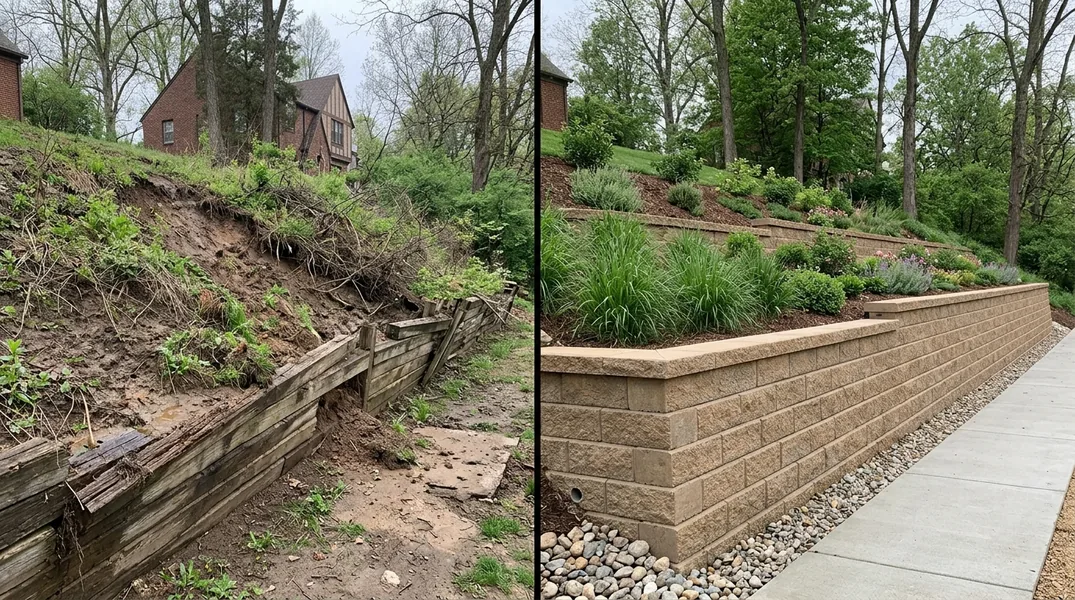
Why Spring Thaw Destroys Retaining Walls in Columbus
Every spring, Columbus homeowners face a critical threat to their landscape: the seasonal thaw. As snow and ice melt, massive amounts of water infiltrate the soil behind retaining walls, creating conditions that can lead to catastrophic failure. Unlike the relatively stable conditions during winter, spring brings unpredictable freeze-thaw cycles that accelerate deterioration of walls that lack proper drainage systems.
The problem intensifies because many retaining walls installed over the past decades were built without adequate drainage planning. Contractors may have cut corners or homeowners may have chosen the cheapest installation option, not realizing that poor drainage is the leading cause of retaining wall failure. When spring arrives and the ground becomes saturated, the consequences become impossible to ignore. Walls begin to lean, crack, or collapse entirely, turning a preventable maintenance issue into an expensive emergency requiring Retaining Wall Replacement.
Understanding Hydrostatic Pressure and Wall Failure
Hydrostatic pressure is the force exerted by water against your retaining wall, and it's the primary reason drainage failures lead to structural collapse. When water accumulates behind a wall, it doesn't simply sit there. Instead, it creates mounting pressure that pushes outward on the wall structure with tremendous force. During Columbus spring thaws, when soil becomes saturated with melting snow and rain, this pressure can increase exponentially within days.
The physics is straightforward but devastating. A single cubic foot of water weighs approximately 62 pounds, and that weight multiplies dramatically as water accumulates behind your wall over several feet of height. A wall that seemed stable all winter can suddenly face thousands of pounds of additional pressure it was never designed to handle. This hydrostatic pressure doesn't just push outward; it also seeps through the wall structure, destabilizing the foundation and weakening the materials themselves. Without proper drainage systems in place, the wall has no way to relieve this pressure, and failure becomes inevitable.
How Retaining Wall Drainage Systems Prevent Failure
Proper retaining wall drainage is the most critical defense against spring thaw damage. A well-designed drainage system works by intercepting water before it accumulates behind the wall and directing it safely away from the structure. The most effective approach involves installing a retaining wall french drain system, which is specifically engineered to handle the seasonal water challenges that plague Westerville and other central Ohio communities.
A french drain typically consists of a perforated pipe installed at the base of the wall, surrounded by gravel and filter fabric. This system captures water that would otherwise pool behind the wall and channels it toward a discharge point away from the structure. During spring thaw, when water volume is at its peak, the french drain system continues working silently in the background, preventing hydrostatic pressure from building up. Additionally, many professional installations include a drainage board or geocomposite material applied directly to the wall face, which further reduces water contact with the structure itself. These layered approaches work together to ensure water moves through and away from your wall rather than accumulating and creating pressure.
Signs Your Retaining Wall's Drainage Is Failing
Early detection of drainage problems can save you thousands in repair costs. If you notice water pooling or seeping at the base of your retaining wall during spring, this is a clear sign that drainage is compromised. Efflorescence, the white powdery substance that appears on concrete or masonry walls, indicates water is moving through the wall structure and depositing minerals as it evaporates. This is your wall sending a distress signal that moisture is penetrating where it shouldn't.
Other warning signs include visible cracks or horizontal movement in the wall, soil erosion at the wall's base, or vegetation growing in unusual patterns along the wall face. If the wall appears to be leaning outward or if you notice gaps forming between the wall and surrounding structures, drainage failure is likely the culprit. Spring is when these problems become most apparent because that's when water volume is highest. If you're seeing any of these signs, don't wait for warm weather to pass. Contact Columbus Retaining Wall at (380) 800-5656 to schedule a free estimate and assess whether Retaining Wall Repair or replacement is needed.
Professional Drainage Solutions for Columbus Area Homes
If your retaining wall is showing signs of drainage failure or if you're concerned about spring thaw damage, professional intervention is essential. Retaining Wall Installation done correctly from the start includes comprehensive drainage planning, but if your existing wall lacks proper systems, retrofitting is possible. Experienced contractors can install french drains, add drainage boards, improve grading around the wall, and ensure water is properly channeled away from your property.
The scope of work depends on your specific situation. Some walls need only minor drainage improvements, while others require more extensive intervention. Concrete Retaining Walls and other materials each have different drainage requirements and vulnerabilities. A professional assessment will identify exactly what your wall needs to survive future spring thaws without damage. Investing in proper drainage now prevents catastrophic failure later and extends your wall's lifespan by decades.
Protecting Your Investment: Spring Maintenance and Planning
Beyond installing proper drainage systems, spring maintenance plays an important role in preventing wall failure. Before spring arrives, clear any debris from the wall area and ensure gutters and downspouts direct water away from the wall rather than toward it. If you have landscaping near your wall, ensure that mulch and soil haven't accumulated against the wall face, as this can trap moisture and contribute to drainage problems. Grade your yard so that surface water slopes away from the wall, not toward it.
If you're planning new Retaining Wall Installation or considering replacement of an aging wall, spring is the perfect time to consult with professionals about your options. Don't let another spring thaw season pass without addressing drainage concerns. Columbus Retaining Wall specializes in designing and installing drainage systems that protect your walls from seasonal water damage. Call (380) 800-5656 today or visit our website to request a free estimate for your property. We'll assess your current situation and recommend the best solution to keep your retaining wall safe and stable for years to come.
Looking for a professional retaining wall contractor in Columbus? Columbus Retaining Wall responds fast for all your retaining wall needs.
Get a Free QuoteOur services: Retaining Wall Installation · Retaining Wall Repair · Retaining Wall Replacement