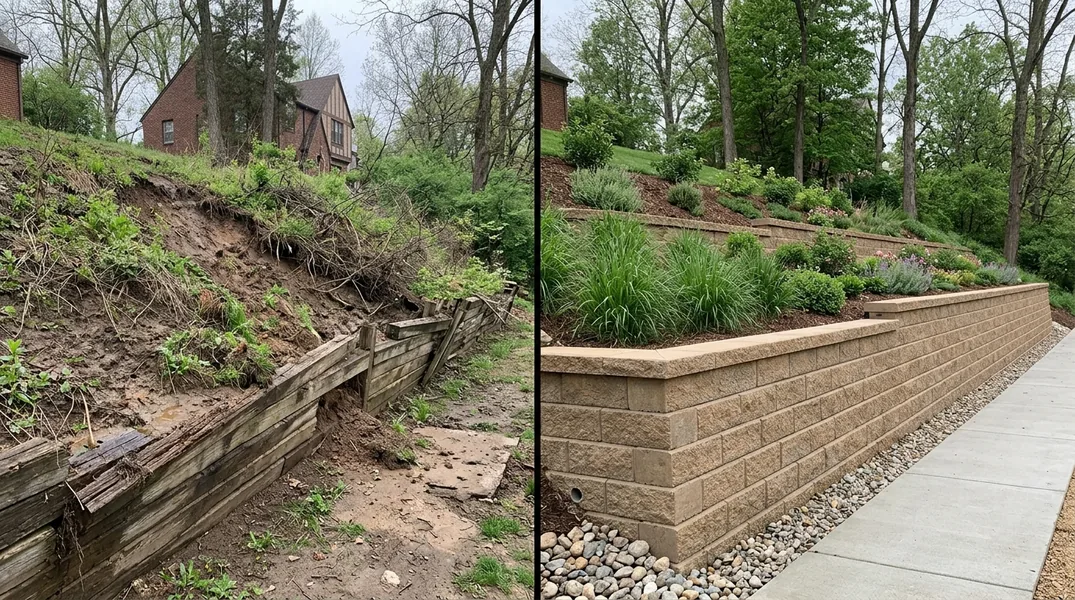
Understanding Columbus Ravine Lot Challenges
Columbus homeowners with ravine lots face a distinct set of challenges when it comes to retaining wall stability. The geography of central Ohio, with its rolling terrain and natural drainage patterns, creates conditions that can accelerate wall failure if proper precautions aren't taken during the initial Retaining Wall Installation.
Ravine properties are attractive for their natural beauty and privacy, but they come with inherent risks. The soil composition in these areas tends to be less stable than on flat terrain, and water management becomes significantly more complex. When a retaining wall is built on a ravine lot without accounting for subsurface water flow, hydrostatic pressure builds behind the wall over time. This pressure is one of the primary culprits behind premature wall failure in the Columbus area.
The Most Common Causes of Retaining Wall Failure
Poor drainage is the leading cause of retaining wall failure on ravine lots. When water accumulates behind a wall, it exerts enormous lateral pressure that no wall structure can withstand indefinitely. This is especially true in Ohio's climate, where freeze-thaw cycles in winter create additional stress as trapped water expands when it freezes. Over multiple seasons, this repeated expansion and contraction weakens the wall's structural integrity from the inside out.
Inadequate compaction and improper backfill material also play major roles in wall deterioration. If the soil behind the wall isn't properly compacted during installation, it settles unevenly, creating voids and allowing water to penetrate deeper. Additionally, using the wrong type of soil as backfill can trap moisture and accelerate degradation. Many homeowners don't realize that the material behind the wall is just as important as the wall structure itself.
Foundation issues and soil erosion compound these problems on ravine properties. The natural slope of a ravine means water naturally flows toward and beneath your wall. Without proper grading and drainage systems in place, this water will eventually undermine the wall's foundation. Erosion at the base of the wall can leave it unsupported, leading to tipping and collapse.
Warning Signs Your Retaining Wall Is Failing
A leaning retaining wall is often the first visible sign that something is wrong. If you notice your wall tilting away from the soil it's meant to hold back, this indicates that lateral pressure has exceeded the wall's structural capacity. This is one of the most common issues we address through Retaining Wall Repair services. Don't wait to address a leaning wall, as the problem accelerates once it begins.
Bowing or bulging in the wall face is another critical warning sign. When you see the wall surface curving outward, it means the soil pressure behind it is forcing the structure to deform. A bowing retaining wall fix requires professional assessment to determine whether repair or replacement is the best solution. This deformation typically indicates that the wall is nearing its failure point.
Cracks, especially horizontal or stair-step patterns, suggest internal stress and water damage. Small hairline cracks might seem minor, but they're entry points for water and the beginning stages of structural compromise. Efflorescence (white, powdery deposits on the wall surface) indicates water is moving through the wall material, carrying minerals with it. This is a sign that moisture management has failed.
Water seeping or pooling at the base of the wall is a definitive red flag. If you notice wet spots, standing water, or muddy areas directly against your wall, the drainage system isn't functioning properly. This water accumulation will eventually cause the wall to fail if not addressed. Similarly, vegetation growing unusually lush near the wall base often indicates excessive moisture in that area.
Why Professional Assessment Matters for Ravine Properties
Diagnosing why a wall is failing requires understanding the specific conditions of your property. Ravine lots present unique challenges that differ significantly from walls on flat terrain. A professional inspection can identify whether the problem is drainage related, structural, or a combination of both. This assessment determines whether you need repairs, reinforcement, or complete Retaining Wall Replacement.
Professional contractors in Columbus understand the local soil conditions, water tables, and climate patterns that affect wall longevity. They can evaluate whether your wall was built with adequate drainage infrastructure and whether that infrastructure is still functioning. They'll also assess whether the original design was appropriate for your specific lot conditions. Many walls that fail were never properly designed for their location in the first place.
Getting a professional opinion early can save you thousands of dollars. A wall that could be repaired with proper drainage installation today might require complete replacement in two years if water damage continues unchecked. Early intervention is always more cost effective than waiting until structural failure occurs.
Retaining Wall Repair and Prevention Strategies
The most effective solution for failing walls on ravine lots involves addressing the root cause: water management. Installing or upgrading drainage systems behind the wall is often the key to stopping failure in its tracks. This might involve adding perforated drain pipes, improving surface grading to direct water away from the wall, or installing a French drain system. For Concrete Retaining Walls and other materials, proper drainage is non-negotiable.
Depending on the extent of damage, your wall might be repairable through targeted interventions. Filling cracks with appropriate sealants, installing wall anchors or tiebacks to provide additional support, and reinforcing the base can extend a wall's life significantly. However, if the wall has bowed severely or lost foundation support, replacement may be the only safe option.
Prevention is always preferable to repair. If you're planning new construction or considering Retaining Wall Installation on your ravine property, ensure the design includes comprehensive drainage planning. Specify quality backfill materials, require proper compaction during installation, and invest in a landscape design that directs surface water away from the wall. These upfront investments protect your property investment for decades.
Getting Professional Help Near You
If you've noticed any warning signs on your Columbus property, don't delay in getting a professional evaluation. Columbus Retaining Wall specializes in diagnosing and fixing wall failures on challenging terrain, including ravine lots throughout the region. Our team understands the specific conditions that cause walls to fail in central Ohio and knows how to design solutions that last.
Whether you need a simple repair or are considering a complete wall replacement, the first step is a thorough assessment of your situation. We offer a free estimate so you can understand your options and the investment required. Call us at (380) 800-5656 to schedule an inspection, or visit our website to learn more about how we can help protect your property. The sooner you address a failing wall, the more options you'll have and the more you'll save in the long run.
Looking for a professional retaining wall contractor in Columbus? Columbus Retaining Wall responds fast for all your retaining wall needs.
Get a Free QuoteOur services: Retaining Wall Installation · Retaining Wall Repair · Retaining Wall Replacement